
 Quality garden equipment & accessories since 1954
 Free UK Delivery on orders over £100
 30 Day returns policy
Where to Position a Fruit Cage: Your Guide to Garden Layout
- Admin
- WM James Gardening Blog
- 14 Apr 2026
-
7views
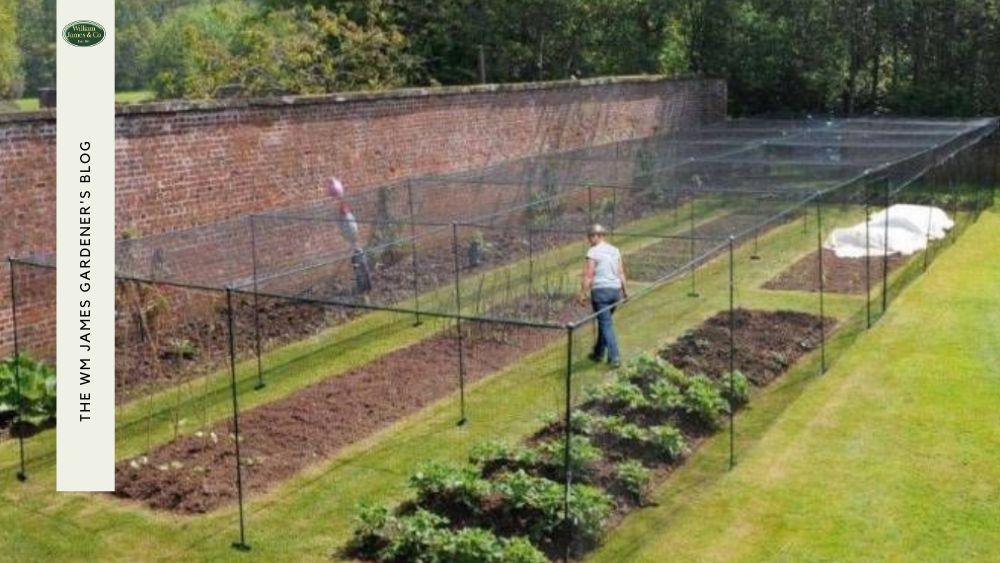
A fruit cage is an essential garden structure for those who take growing their produce seriously, but one of the things gardeners get wrong time and time again is the positioning of them. To ensure you make the most of your space, read our guide on where to position a fruit cage.
You might not think so, but fruit or vegetable garden positioning can make all the difference between having a healthy yield and having nothing to show for your efforts in the patch.
The right positioning can also help maximise the lifespan of your fruit cage.
So, if you're ready to plan and design the layout of your fruit and vegetable patch, we have all the tips and tricks you need for a perfectly positioned fruit or vegetable cage.
Where to Position a Fruit Cage: A Quick Insight
- Place your fruit cage in a sunny, south-facing location to maximise light and support healthy growth.
- Ensure the site has well-drained, nutrient-rich soil to prevent waterlogging and root disease.
- Position on level ground with good airflow and easy access for maintenance and harvesting.
- Avoid frost pockets, shaded areas, and exposed windy spots that can damage plants and reduce yields.
- Choose an open space without overhanging trees or obstacles to reduce pests, debris, and shading.
Key Considerations for Fruit Cage Positioning
Most gardeners will assemble their fruit cage in the spot they think is best. But chances are, they haven't considered all the factors at play.
Below is a list of things you should think about before deciding on your fruit and vegetable garden positioning.
Watch Our Video on How to Assemble Your Fruit Cage
Soil Drainage and Quality
The first thing to consider is the quality of your soil and its drainage capabilities. Different fruits and vegetables have varying needs, but almost all thrive in well-drained, nutrient-rich soil (fruits like blueberries prefer acidic soil).
Poor drainage can lead to waterlogged roots, which can cause rot and other diseases, ultimately killing your plants.
Read Our Guide on Protecting Soft Fruits
To test your soil's drainage, dig a hole about 12 inches deep and fill it with water. If the water drains away in less than four hours, your drainage is fine. If it takes longer, you may have a drainage issue.
If your chosen spot has heavy clay soil or poor drainage, you'll need to improve it before installing your cage.
You can amend the soil by incorporating organic matter like compost, peat moss, or well-rotted manure. This will improve both the soil structure and its nutrient content.
Alternatively, if amending the soil isn't feasible, consider building raised beds within your fruit cage, using growing containers, or choosing a different, more suitable location altogether.


Read More on Successful Container Gardening
Sunlight and Shade
It's no secret that plants like sunlight; after all, it's necessary for their growth. However, some plants need their shade, so it can be tricky to find a middle ground.
The RHS has some great advice on this. All you need to do is find out which direction your garden is facing. Below are their recommendations for each direction:
- North-facing shadier gardens: Plant fruit that will ripen in cold situations, such as alpine strawberries or acid cherries
- South-facing gardens: The sunniest and suitable to grow all fruit, especially those that need ripening, such as figs and grapes.
- West-facing gardens: Receive afternoon sun, but also may be hit by south westerly prevailing winds. Good for raspberries, gooseberries, and currants.
- East-facing gardens: Receive morning sun, but are shaded in the afternoon. It can be open to cold easterly winds and can be drier than west-facing parts. Suitable for pears, apples, plums, cherries, currants, gooseberries, blackberries, and raspberries.
-
 Classic Steel Low Vegetable CageFrom: £144.30
 -
 Premium Aluminium Low Vegetable CagesFrom: £115.64
 -
 Classic Steel Walk-in Fruit Cage Frame & NettingFrom: £327.70
 -
 Premium Aluminium Walk-In Fruit Cage Frame & NettingFrom: £236.92
Access
Access points have less to do with the plants and more to do with you. You need to be able to get to your fruit and vegetable cage easily for maintenance and to check on your produce.
It's no use putting your fruit cage in a spot in your garden that's difficult to reach (perhaps it's boggy or down difficult steps), you should assemble it somewhere easily accessible where you don't mind checking on it a few times a week.
You'll also need space to push a wheelbarrow to your cage for harvesting and other maintenance tasks.
Temperature
Temperature plays a crucial role in determining the success of your fruit and vegetable cage, especially in the normally chilly, wet climate of the UK.
Different crops thrive in varying conditions, so it’s vital to consider the specific needs of the plants you intend to grow. For instance, certain fruits, such as citrus, benefit from warmer conditions, whereas crops like leafy greens may prefer cooler environments.
Ensure that your cage is placed in a location where the temperature remains suitable throughout the growing season.
You could consider installing shade netting or ventilation systems if your garden experiences extreme heat, as this can help protect your plants and maintain an optimal growing climate.


Equally, if your fruit cage is positioned at the bottom of a steep garden, you could experience frost pockets, which fruit don't take kindly to. We suggested moving your cage nearer the top of your garden, or using fleece for colder months.


Wind
We strongly advise setting up your fruit cage in a location sheltered from strong prevailing winds.
A cage situated in a natural wind tunnel or an exposed, open area can be vulnerable to powerful gusts, which may lead to significant damage.
The structure itself could be compromised, with joints loosening or poles bending over time. Netting can also be torn or stretched by high winds, reducing its effectiveness against pests.
Inside the cage, your crops are also at risk. Debris can be blown in, potentially harming delicate plants and young fruits, while the constant battering from the wind can stress the plants, causing them to weaken, break, or struggle to grow properly.
You may also find that pollination is impacted. High wind speeds hinder insect activity and therefore decrease pollination success.
Level Ground
Level ground is ideal for setting up a fruit cage, as it provides stability and ensures even growth conditions for your plants.
Uneven ground can create challenges, such as water pooling in lower areas or difficulties in securing the cage's framework.
If your garden site is uneven, consider levelling the ground or building raised beds within the cage to create a stable and practical growing space.
Raised beds not only address the issue of uneven ground but also improve drainage, reducing the risk of waterlogging and root rot.
We also recommend positioning it south to maximise sunlight, on the side of the slope to avoid strong winds, and in the middle/top of the slope to protect against frost pockets.
Learn How to Frost-Proof Your Garden
Ensuring proper preparation of the site will contribute significantly to the success of your fruit-growing efforts.
Where to Plant Fruit and Vegetables: Our Garden Layout Recommendation
We understand that many gardeners have no choice when it comes to where they need to position their fruit cage. This might be down to other garden features, a lack of space, or something else.
But it is important to take our advice on board, where possible, to give your plants inside the fruit cage the best possible chance of producing a high yield.
Below is our 'ideal' fruit and vegetable cage position:
- In a sunny south-facing spot. Ideally, short plants will be on the south side and tall ones will be on the north side to maximise the light
- Somewhere level
- In a clear, open space with no overhanging trees or bushes, and easily accessible
- Away from heavy winds
- On an area with well-draining, composted soil
- In an area free from frost-pockets
Common Mistakes You Should Avoid When Positioning Your Fruit and Vegetable Cage
Unfortunately, many gardeners place their fruit or vegetable cages without considering the proper advice.
It's an easy mistake to make, especially if you're trying to keep it out of the way of children's play equipment, seating areas, and ponds, but the cage's position is vital for your plants' growth.
Below are the most common mistakes gardeners make when positioning their plant cages, so you can avoid them:
- Assembling the cage in shade: Many fruit and vegetable plants don't thrive in shady conditions and need adequate sunlight to grow to their full potential.
- Ignoring garden frost pockets: Frost pockets are low-lying areas in gardens where cold air lingers, creating a higher risk of frosts, especially during winter and early spring. Assembling a fruit cage and planting in these areas can hinder plants' growth.
- Assembling the cage under a tree: Birds often come hand in hand with trees, and while your netting stops them from getting in, you may have to deal with rips or tears if birds are persistent. You may also find debris and bird droppings in your cage more frequently.
- Not composting or mulching the soil before assembling the cage: Prepping the soil beforehand is essential to keeping your plants happy and healthy. This ensures they get all the nutrients they need without risking disease due to waterlogged ground.
- Assembling the cage where there is poor airflow: Plants need good airflow to avoid disease. By assembling your cage in a tight corner that receives little to no light or airflow, you could hinder your plant's growth.
Advice on Planning a Fruit Garden: Fruit Spacing and Grouping
Once you've chosen where to position a fruit cage, it's time to plan the layout.
Proper spacing is crucial, as it allows better air circulation, sunlight exposure, and nutrient absorption. Overcrowding can lead to poor growth, so make sure to leave enough room between each plant.
Different fruits have different needs, so consider their size and growing habits when planning your layout.
Grouping similar fruits together can also simplify care and maintenance, making it easier to manage watering, pruning, and harvesting. The RHS recommends grouping pears together, apples together, and most soft fruits (like berries and currants) together.
For example, apples and pears need much more space (around 3-4.5 metres) than soft fruit (0.75-2.5 metres).
Below is an example of a fruit cage layout to inspire your own unique design, filled with fruits you love to eat.
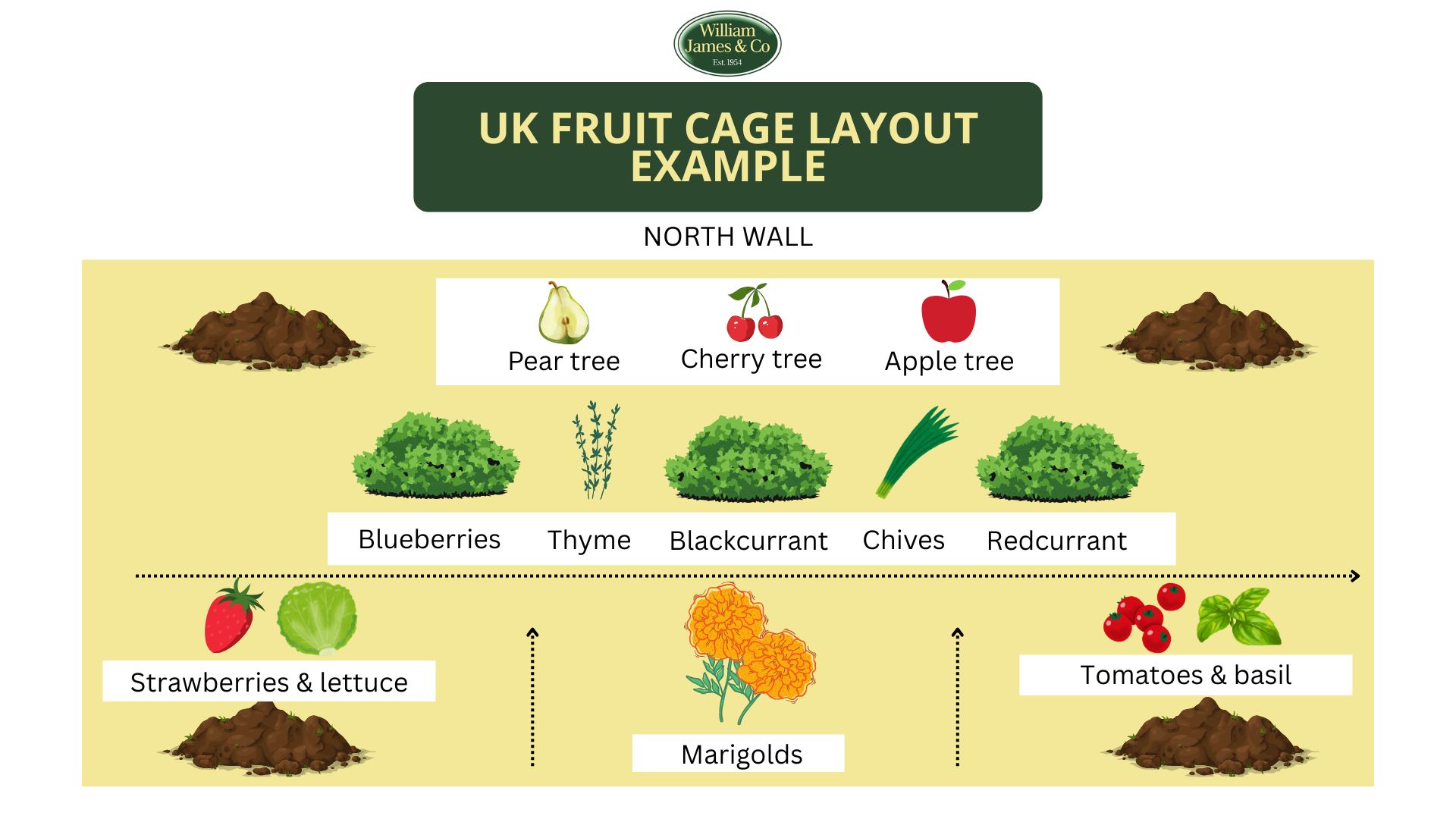
You'll notice there are things like herbs and flowers within our design. This is called companion planting, and it's useful for attracting beneficial insects that pollinate or eat damaging insects.
Read More on the Importance of Wildlife Gardening
A Word on Vegetable Garden Positioning
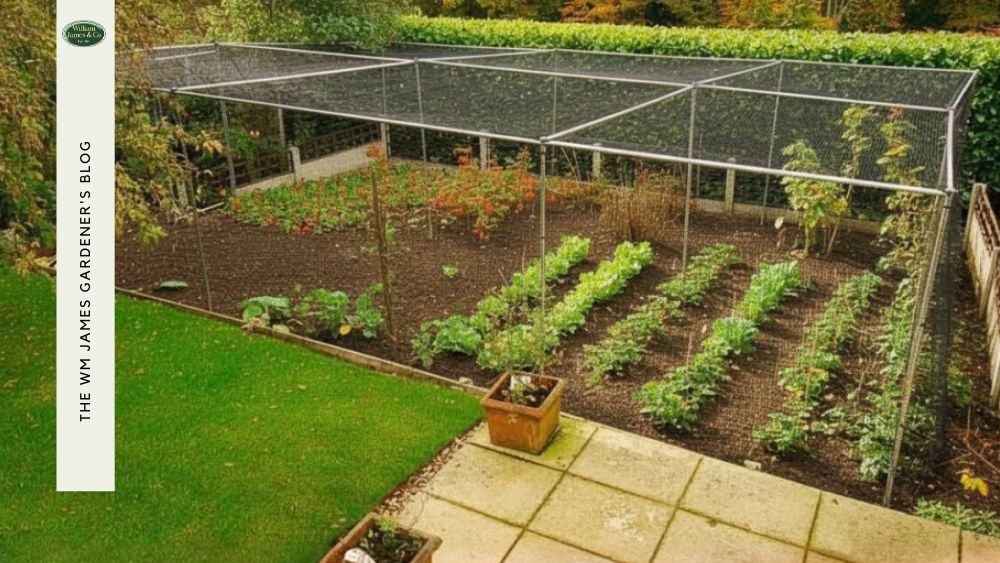
While we call them 'fruit cages,' you can also grow vegetables in them, which is why we've been mentioning them throughout.
If you do wish to plant vegetables in your fruit cage alongside your fruit crops, that's great! But there are a few things to bear in mind.
Nothing really changes position-wise (veggies need sun, nutrients, and warmth, too!), but they can change the layout.
For example, most vegetables are excellent companion plants for fruit, especially strawberries and lettuce, tomatoes and carrots, and fruit trees and leafy greens, but others are not.
Blueberries and tomatoes aren't best placed together, nor are tomatoes and potatoes, or strawberries and brassicas.
Read the Ultimate Guide to Growing Root Vegetables
As long as you give all your plants adequate space, and you're mindful of which plants are being placed where, you should be good to go.
Final Words: Positioning Your Fruit Cage for Optimum Results
As you've probably guessed, the positioning of your garden fruit cage is crucial to its success in protecting your home-grown fruit and vegetables.
You should now have a good idea of where you're going to place yours in your outdoor space. Will it be just beyond the patio, right in the middle, or at the bottom of the garden where most sunlight penetrates?
Remember our advice, avoid the most common mistakes, and you'll be ready to assemble your fruit cage!
If you need any more help or advice on fruit cages (or if you have yet to buy one!), head to our blog, where we have plenty of information on the structures, or shop our fruit and vegetable cage options below.
-
Classic Steel Low Vegetable CageFrom: £144.30
-
Premium Aluminium Low Vegetable CagesFrom: £115.64
-
Classic Steel Walk-in Fruit Cage Frame & NettingFrom: £327.70
-
Premium Aluminium Walk-In Fruit Cage Frame & NettingFrom: £236.92
If you still have questions, please don't hesitate to contact us. As the leading supplier of fruit cages in the UK with over 160 years of experience in the horticultural industry, we'll be able to help!
FAQs
How Should I Position My Fruit Cage in My Sloped Garden?
If possible, the fruit cage should be placed on level ground to ensure stability and proper drainage.
However, we know this isn't always possible. If you do have to have your fruit cage on a slope, we recommend positioning it south to maximise sunlight, on the side of the slope to avoid strong winds, and in the middle/top of the slope to protect against frost pockets.
What Should I Grow in My Fruit Cage?
You can grow a huge variety of plants inside a fruit cage, from fruit to vegetables, herbs, and flowers. Some examples include:
- Dwarf fruit trees
- Berries
- Brassicas
- Basil
- Salad veggies
- Tomatoes
- Marigolds
What Should I Avoid Planting Next to My Fruit Trees?
You actually have to be wary of the produce you plant next to fruit trees, because many will fight the tree for nutrients, water, and root space, and even carry diseases. Some examples of plants to avoid planting next to fruit trees include:
- Root vegetables (carrots, potatoes)
- Walnut and other nut trees
- Nightshade vegetables (tomatoes, peppers)
- Brassicas
If you plan to plant fruit trees inside your fruit cage, be sure to give them enough space to thrive.
What Fruit Cage Should I Choose?
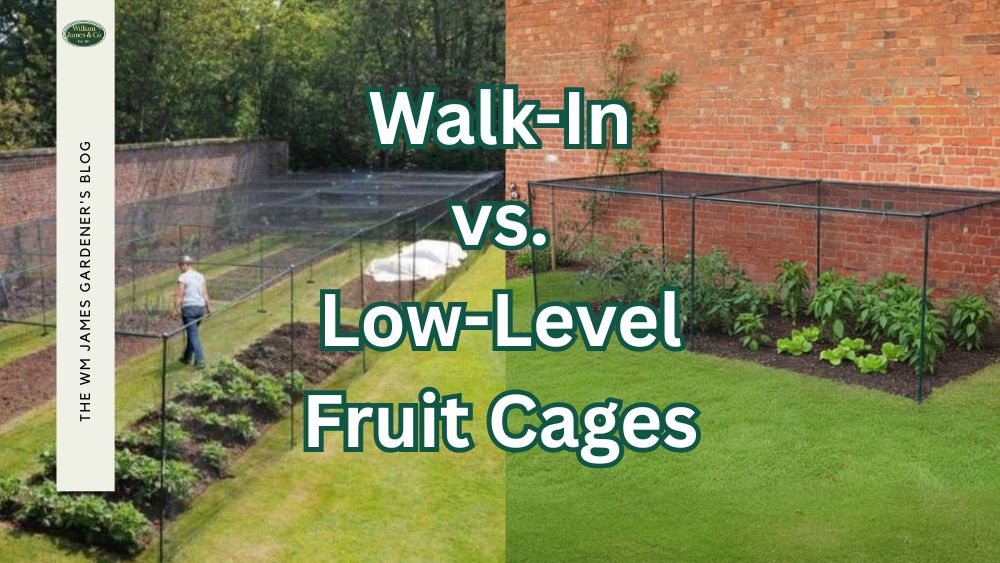
The type of fruit cage you choose depends on the size of your outdoor space, whether you're looking for more of a permanent structure, or if you want something more easily movable.
Here at William James & Co., we offer four types of fruit cages, suited to every gardener. From our premium aluminium walk-in cage to our classic steel low cage, we have the perfect fruit cage for your garden and planting needs.
Check out our fruit cage buying guide here for help choosing the best one for you!

 RSS Feed