
 Quality garden equipment & accessories since 1954
 Free UK Delivery on orders over £100
 30 Day returns policy
Fruit Cage Assembly Guide: Building a Fruit Cage Step-By-Step
- Admin
- WM James Gardening Blog
- 12 Aug 2025
-
16views
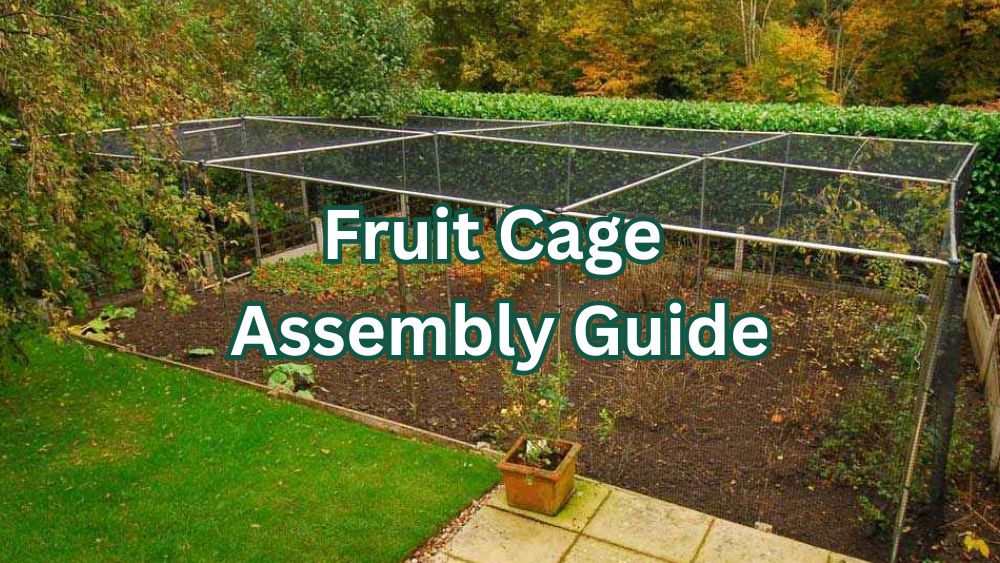
Our fruit cage assembly guide covers everything you need to know about building a fruit cage, from the steps involved to maintenance afterwards.
If you want to jump right in, watch our fruit cage assembly video below!
For more in-depth instructions, you can read our step-by-step below, along with additional advice on mistakes to avoid and required maintenance.
How to Build Your Own Fruit Cage
Building your own fruit cage requires two people to help with the job, but you don't need any specialist help or tools — just some easy-to-follow instructions, which we've placed below.
A screwdriver, mallet, and scissors are all you need (plus some tools for the necessary groundwork you may need to do).
Need Advice on Choosing a Fruit Cage? Read Our Buying Guide
Stage 1) Preparing Where to Put the Fruit Cage
- Remove weeds, debris, and stones from the ground.
- Evenly mark the cage's footprint for an aligned setup.
- Prep the ground ahead of growing produce by implementing weed control and improving soil drainage.
First and foremost, you need to prepare the ground for your new structure, especially if you plan on growing produce inside our cage.
— For the Cage
Start by removing existing weeds, stones, or debris with a garden fork or rotavator to loosen compacted soil. This will soften the ground to create a smooth surface for your fruit cage to solidly stand on.


This is essential to ensure the netting you install later remains tensioned.
Next, you need to mark the cage's footprint using the exact dimensions of the cage you have.
Pegging out the corners with string lines will help ensure the structure is square and evenly aligned, preventing gaps between the frame and netting.
For windy or exposed gardens or allotments, you might want to prepare the ground for deeper stakes or anchor plates to secure the frame and prevent unwanted movement.
Lastly, you'll want to leave enough space around the cage for wheelbarrows or maintenance equipment, so you can go to and from the cage without disturbing crops.
— For the Crops
The ground you choose to place your fruit cage should be fit for growing produce, otherwise, your efforts could lead to a poor yield.
First, check the drainage and soil quality.
Fruit and veg crops prefer free-draining soil, so if your site is prone to waterlogging, think about adding sand or slightly raising the area with topsoil or compost. You'll find you have much happier plants.
Next, you should consider weed control. While you removed them earlier as part of your ground prep for the cage, it's likely they'll grow back without control.
Laying down a weed-suppressing membrane or mulch before you begin planting can reduce weed maintenance and improve airflow around your plants.
-
 Heavy Duty Weed Control - Per RollFrom: £52.80

Stage 2) Fruit Cage Frame Assembly
- Check you have each tool, fixing, and frame piece.
- Lay out the base rods and secure them into the ground, followed by the ground anchors. Leave a gap for the door.
- Install the uprights into the ground anchors.
- Attach the top rails, ensuring everything is fixed and tightened.
Now is the time for the cage assembly itself, and to ensure you have all the parts necessary for your structure, we recommend laying them out and checking you have each bit.
There should be frame pieces, connectors, screws, brackets, and netting.
We'd like to remind you that your William James fruit or vegetable cage will come with all the necessary parts and fixings for a successful setup. All you need are your three tools, as outlined above.
1 — The Fruit Cage Door
The door should be the first thing to set up, and you'll do this using the saddle clamps and bolts provided.
Attach the door clips, and place it to one side until later.
2 — Lay Out the Base
Next, lay out the base rods where you want the cage installed, leaving a gap for the door. Using the ground pins provided, peg the frame into the ground.
Now that the base is secured in the ground, you should install the ground anchors at each corner using a mallet. These should be flush to the ground, so it might take a little strength.
3 — Insert the Vertical Uprights
The vertical uprights are now ready to be inserted into the base connectors you just installed. Secure these with screws or brackets, ensuring each is completely straight. If you need a spirit level, please do use one.
At this point, you should attach the top rails using the mushroom caps and bolts.
Be sure to tighten the fixing with a screwdriver because you want it to be as sturdy as possible. This will take two people — one to hold the bar and one to tighten the fixing.
Your fruit cage frames should now be installed, sturdy, and tight.
Now for the netting.
Stage 3) Fruit Cage Netting Installation
- Install the surround netting first using cable ties and pegs.
- Cut the surround netting between the post on the opening side of the door and the fixed post.
- Install the roof netting by clipping it with S clips to the surround netting. To do this, there should be a 20cm overhang.
- Install the roof netting corner to corner until taut. For extra security, add cable ties to fix the roof to the top rails.
- Trip excess overhang if needed.
1 — Attach the Side Netting
The surround netting should be attached first, and ideally, you should start from the post next to the door. As you go round, secure the edges tightly to the posts using cable ties evenly down the post.
Remember, as you move around the structure, the bottom of the netting should be as close to the floor as possible.
Because you've left the door until last, you can fully wrap the netting around it, tying the cable ties to the post on the side that opens, and then cutting the netting between the fixed post and the door post on the side that opens.
This ensures you can actually enter your structure.
2 — Secure the Bottom of the Netting
Now that you've fully wrapped the netting around the structure, you can go around and evenly place pegs at the bottom of the net to ensure it stays down and no animals can burrow underneath.
3 — Attach the Roof Netting
The cage roof netting is the final part of your installation. To get it over the structure, we recommend two people raise it over the top of the fruit cage, being careful to avoid snags or catches.
When the net is properly centred, there should be about a 20cm overhang, so don't worry if it's not the exact size of the structure's length (as long as it's not too small!).
Starting at one corner, pull the netting taut diagonally across the roof and secure it to the surround netting with S clips.
Repeat on each side of the roof netting until it's in place, centred, and taut (with a little flex to prevent tearing).
Once you're happy, you can use cable ties to attach it to the top rails. If there is excess overhang, feel free to trim it with scissors.
Your fruit cage netting installation is now complete.
Step 4) Finishing Your Fruit Cage Assembly
- Perform final checks for gaps and loose spots.
- Use extra clips for added structure.
- Test the door to see if it can open and close with no problems.
To make sure your fruit cage has been installed in the best possible way, you should carry out some final checks.
Walk around the structure to inspect the netting for gaps or loose spots. Some common places are the bottom of the surround netting and where the roof netting should meet the surround netting.
If there are gaps here, birds and other pests may be able to enter.
If you notice any stress points along the corners or middle bars, use extra clips if you have any. This will make your structure more secure.
You should also test the door to ensure the netting doesn't obstruct its opening.
Once you've performed these checks, your work here is done! You should now have a fully functioning, structurally sound fruit cage.
Common Fruit Cage Setup Mistakes to Avoid
There are a few common mistakes people tend to make when installing a fruit cage. To ensure your set-up is as seamless as possible, we've outlined them below so you know what not to do.
- Not checking the ground is level: A sloped or uneven surface will cause frame misalignment, making it hard to install the uprights and secure the net evenly. Use a spirit level and clear the ground before starting.
- Assembling the frame before planning the door position: We see this all too often! Remember, installing the fruit cage door last might mean you forget to leave a gap or cause clearance issues, especially near walls or beds. Decide on the position early on.
- Pulling the net too taut: There's taut, and then there's too taut. Over-tensioning the netting can cause stress on the corners or lead to tearing during windy weather or temperature change. Keep the net snug with a little flex.
- Uneven frame corners: If the corners aren't square, the roof bars won't align properly, and the netting will sag or fit poorly. Measure to see if the frame is square before tightening the fixings.
- Assembling without help: Attempting to install a large fruit cage solo can lead to mistakes, dropped fittings, or unsafe conditions. Always have two people, especially when lifting the roof netting or aligning long poles.
- Forgetting to sort components: Mixing up different-length poles or similar-looking brackets leads to time-consuming rework, which can be really annoying. Instead, lay out and group all components before starting, checking them against the kit list.
Year-Round Maintenance Tips for a Professional Set-Up
Now that you have your fruit cage set up and ready to go, it's worth mentioning the seasonal maintenance you'll need to complete to ensure your cage stays in top condition.
While William James cages are built to last and are extremely hardy against tough weather conditions, they still need a little care so you can get the most out of your long-standing structure.
We have a whole blog post on seasonal fruit cage maintenance, so if you'd like to learn the details, you can head over there.
But, if you'd like to know the basics, here is a brief summary of your fruit cage maintenance checklist from season to season.
Spring
- Inspect for winter damage
- Clean netting and frames
- Tighten fixings
- Weed control inside the cage
- Check soil conditions before planting spring plants
Summer
- Check for pests
- Ensure doors fully close
- Monitor crop weight pulling on the cage netting
- Clear excess foliage near edges
- Consider shade netting
Autumn
- Keep on top of leaf and debris removal
- Harvest remaining crops and exhausted plants
- Clean cage netting if storing away for winter
- Check pegs and anchors for rust or movement
Winter
- Remove or roll back roof netting ahead of snowfall (unless using a William James fruit cage, which is snow-proof)
- Clear overhanging branches
- Review the past year for failures and successes
Conclusion: Building a Fruit Cage to Keep Your Garden Healthy
And that's just about everything you need to know to perform a successful fruit cage assembly.
If you need any more help or advice on setting up your structure, please feel free to contact us, and we'd be more than happy to help.
Just remember, you need two people to install the cage, a few home tools to hand, and a nice, even surface as a base for your structure.
The rest is simple!
For more helpful tips on all things gardening, please head to our blog, where we have tons of posts on everything from pest management to growing seasonal veggies in your fruit cage!
*Get free UK delivery when you spend £100 or more.
FAQs
What Tools Do I Need to Build a Fruit Cage?
You only need a mallet, some strong scissors, and a screwdriver! Everything else will come with the fruit cage you order from William James.
Can One Person Assemble a Fruit Cage?
It's best that two people are present to help with the fruit cage assembly. One person may be able to do most of the work, but another is needed to assist with long poles and roof netting.
How Do I Stop the Fruit Cage from Sagging?
There are a few ways to stop your net from sagging. Some include ensuring the frame is well-aligned, using the suggested number of ties, clips, and pegs, and overlapping the roof netting to properly clip to the surround netting.
Always remember to keep your netting taut, with a little bit of flex, to prevent rips and tears.
Does a Fruit Cage Need Planning Permission in the UK?
Generally, you do not need planning permission to have your fruit cage in the UK.
If you have any doubts about yours, whether that's down to size or placement, always get into contact with your local council to confirm.
Related Posts







 RSS Feed